
What a Small Temperature Change Revealed
A process heat exchanger had been operating without issue for years.
Production was on schedule. Operators weren’t reporting problems. No alarms had been triggered. To anyone walking through the plant, everything looked normal.
If maintenance had been scheduled that morning, there would have been no obvious reason to inspect the heat exchanger.
But imagine someone had been watching the trends instead of waiting for symptoms.
Over the past several weeks, approach temperature had been creeping upward. Differential pressure was slowly increasing. Neither change was dramatic.
Neither would have justified shutting the unit down. Neither even proved something was wrong. But together they raised an important question.
Is this simply normal process variation, or is the equipment beginning to change?
That question landed on the reliability engineer’s desk. Do nothing? Schedule an inspection? Wait for another week’s worth of data? Every option carried a cost.
Pulling the exchanger offline could consume a full day of maintenance labor and interrupt production for a condition that might not require intervention. Waiting, however, carried a different risk.
If fouling really was beginning to develop, every additional week would gradually reduce heat transfer efficiency. Energy use would continue climbing. Eventually the maintenance decision would no longer be optional.
The problem wasn’t deciding whether to clean the heat exchanger. The problem was deciding when.
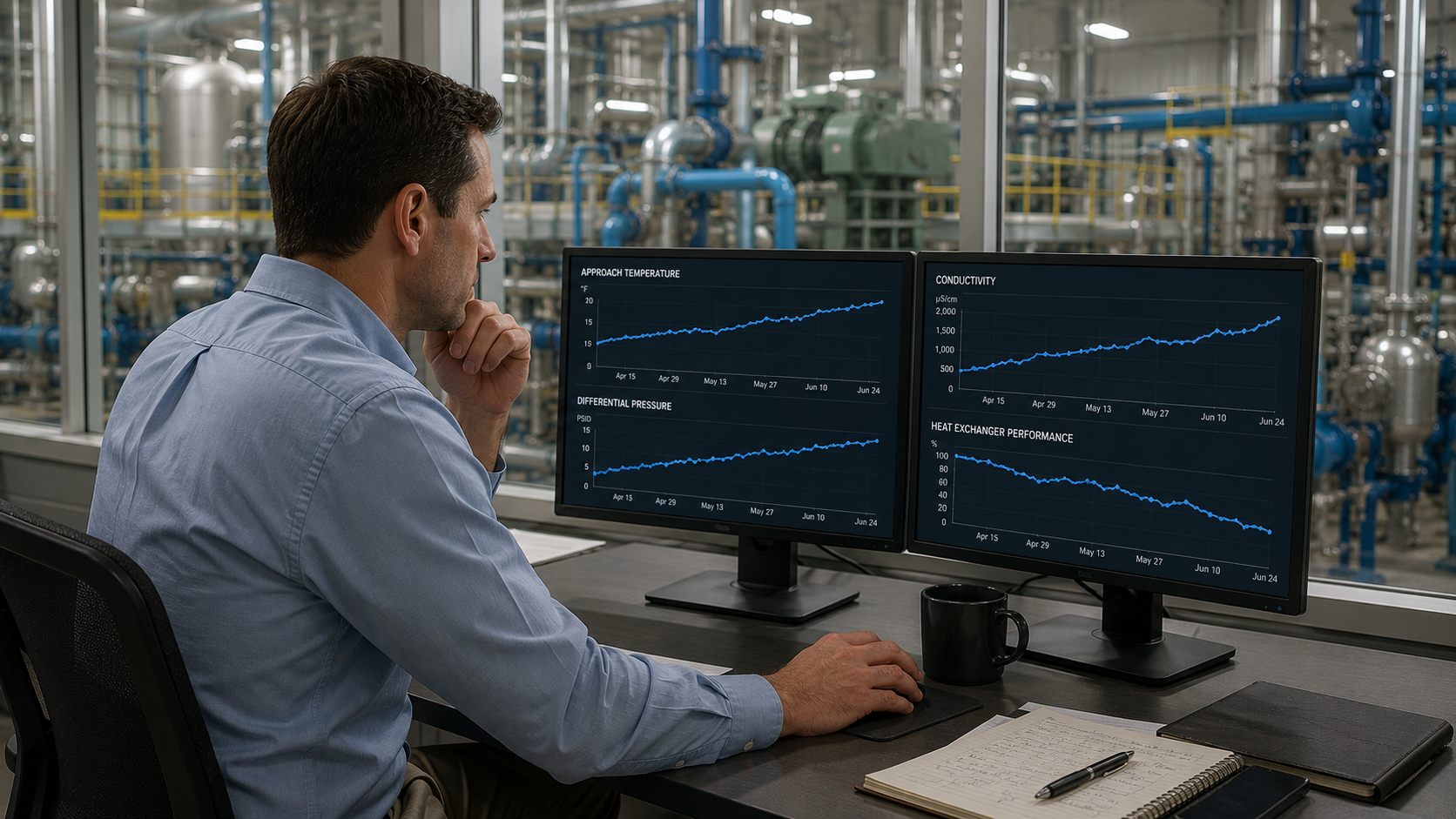
So instead of reacting to a single data point, imagine the engineer continued watching the trend. Another week passed. The pattern continued.
The equipment wasn’t failing. It was changing. The gradual increase wasn’t dramatic enough to trigger an alarm, but it was consistent enough to justify planning maintenance during the next scheduled production window.
No emergency shutdown. No unnecessary inspection weeks earlier. No waiting until operators noticed declining performance. Just enough evidence to make a confident decision.
That’s what made the difference. Not predicting the future. Not eliminating uncertainty. Reducing it.
Because reliability isn’t simply about preventing failures.
It’s about recognizing when normal operation quietly becomes something else. And those changes often begin long before equipment gives anyone a reason to pay attention. Sometimes they begin in the water.
Why this matters
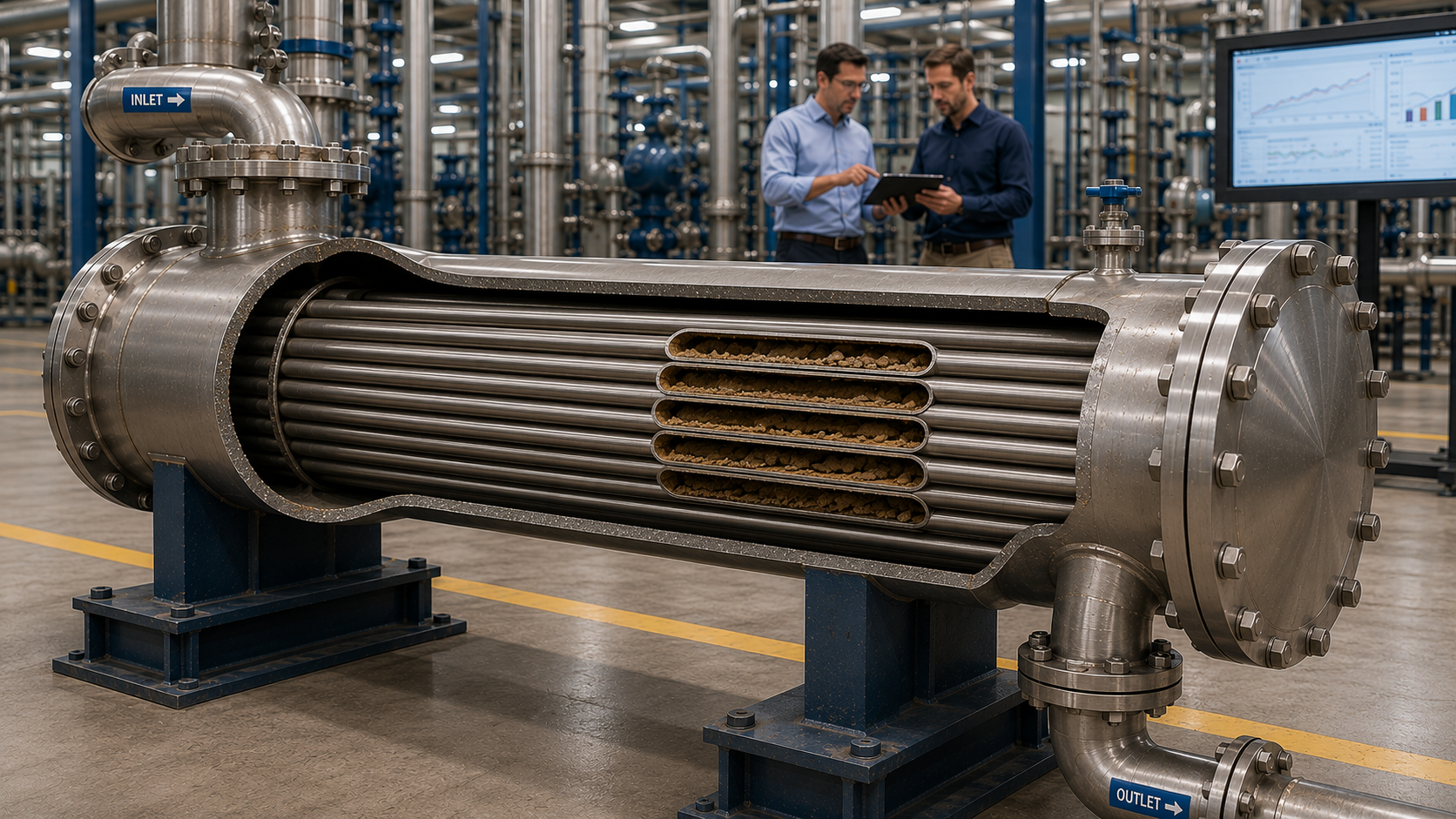
Cooling water doesn’t simply transfer heat. It also carries evidence. As scaling, fouling, corrosion, or biological growth begin to develop, they often leave subtle fingerprints in operating data long before production is affected.
Those changes may be small. But when they’re continuously monitored, they can provide maintenance teams with something they rarely have enough of: Time.
Time to investigate. Time to plan. Time to schedule work before it becomes urgent.
Because the most expensive maintenance decisions usually aren’t made after equipment fails. They’re made before it fails, when teams are forced to decide with incomplete information.
